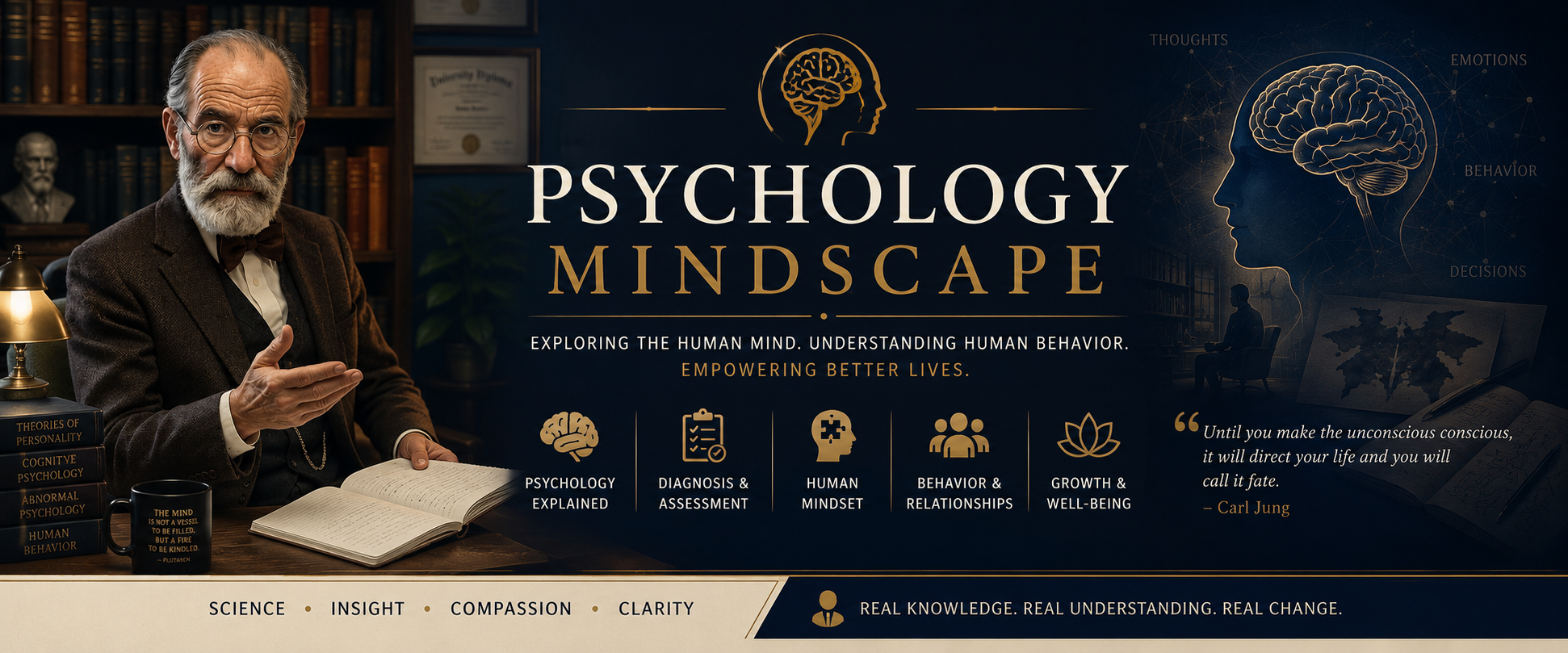


Psychology Mindscape

Psychology Mindscape

Understanding the hidden patterns of the mind — attachment, emotion, and why we are the way we are

Psychology Mindscape explores the quiet machinery behind human emotion — why we miss people who hurt us, why being treated well can feel unfamiliar, and why the mind overthinks in the name of protection. Drawing on attachment theory, cognitive psychology, and everyday experience, each piece turns complex ideas into clear, human insight.

The patterns beneath behaviour

Our reactions usually make sense once we understand where they came from. Psychology Mindscape looks at how early attachment, learned expectations, and automatic thoughts quietly shape the way we love, trust, and protect ourselves.

Psychology made human

Grounded in the work of thinkers like Bowlby, Kahneman, Fromm, van der Kolk, and Beck — but written for everyday life. No jargon, no diagnosis. Just reflections that help you understand yourself and the people you care about.

Sometimes the person we miss is not the one who left — it is the version of ourselves that existed beside them. The hopeful one. The softer one. Grief is rarely only about a person; it is often about the future we imagined together and never got to live.
When you have learned to expect unpredictability, being treated well can feel strange instead of safe. The nervous system trusts familiar pain more easily than unfamiliar peace. Not because something is wrong with you — but because the mind is loyal to what it knows.
Overthinking often disguises itself as problem-solving. The mind replays and prepares because certainty feels safer than vulnerability. The honest question is whether your thoughts are helping you understand — or only helping you feel temporarily prepared.

Published works

1 title by Psychology Mindscape

PDFNewThe Quiet Patterns

The Quiet Patterns

Your mind is telling a story. Right now. In this moment. It is interpreting everything around you — every sound, every sensation, every memory — and weaving those interpretations into a narrative. A story about who you are. A story about what the world is. A story about what happens next. The strange part? You did not write most of it. Most of your story was written by your childhood, your relationships, your traumas, your wins, your losses — and the quiet conclusions your mind drew from all of them. Conclusions that feel like truth but are actually just patterns. Patterns that repeat so often they become invisible. Inside, 45 chapters explore attachment theory, cognitive biases, emotional triggers, and the invisible forces that shape your thoughts and relationships. Referencing real psychologists — Bowlby, Kahneman, van der Kolk, Fromm, Beck — this book shows you how the mind creates patterns, why they repeat, and how to see them clearly enough to choose differently. This is not about fixing yourself. It is about understanding yourself. The quiet patterns are already there. This book helps you notice them.

$15.00